
Internationally celebrated, award-winning filmmaker Isabel Coixet is no stranger to the art of navigating difficult life circumstances through a female gaze (My Life Without Me, 2003; The Secret Life of Words, 2005; The Bookshop, 2017). Emancipated from both a patriarchal and formulaic status quo that obscures how experiences of love, loss, and death are felt viscerally and intellectualised clearly, Coixet has consistently created "good cinema"—a cinema of care, grace, empathy, and unwavering purity in its curiosity to discover the truth of her characters.
Their lives burst with force and spontaneity onto the screen through carefully crafted frames that hold tactile textures in a decisively lyrical, analogue tapestry. Captured through the wondrous warmth of 35mm, the whimsical plasticity of handheld Super 16mm, or the nostalgic, affective poetry of Super 8mm, Coixet’s distinct style presents more than fully embodied characters; it offers a way of looking at cinema by experiencing it through the senses. Frame by frame, her films acquire a haptic quality. The narratives feel light to the touch, yet occasionally coarse or rough. Sometimes we are warmly invited into the characters' fragility; at others, we are presented only with hints, dignified suggestions, or implications. Emerging organically through quotidian minimalism, the aesthetics and vision in Coixet’s work acquire an authentic, raw, but gentle expression.
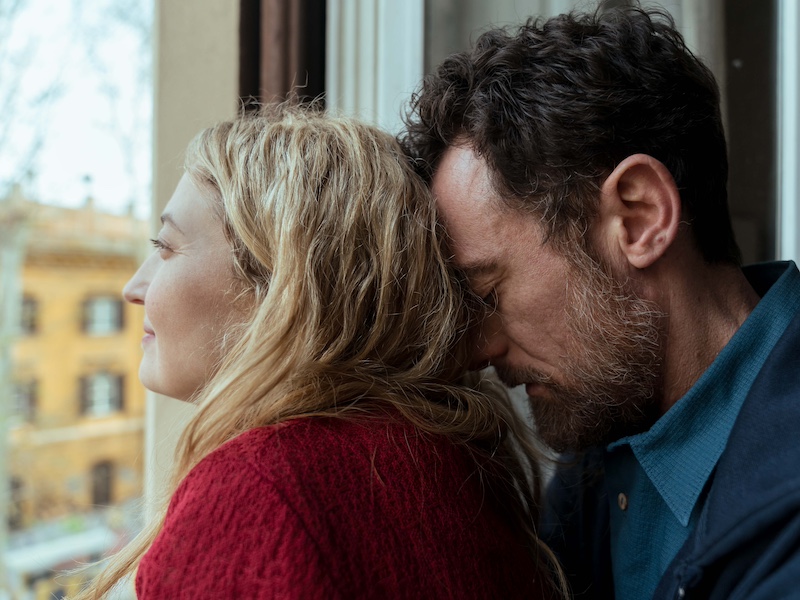
While My Life Without Me (2003) continues to stream quietly but poignantly online, Coixet revisits its core premise in her latest work, Three Goodbyes (2025)—albeit from an entirely different point of view. Featuring a charismatic lead on a private journey of self-discovery she has no choice but to undertake, the film unfolds around a sudden realisation of mortality and the subsequent loss of love and hope. Rather than focusing on the pain of departure or the loss she imagines her loved ones might endure, Three Goodbyes celebrates the life that remains—in all its intensity, absurdity, and potential unfathomability. It is a life that yearns to be experienced in minutes, even seconds, through fleeting sensations or solidified emotions. Though the lead character never planned for this life, she chooses to immerse herself in its miraculous avalanche of experiences, despite its brevity. Set against the backdrop of a 2.0 post-digital era of artificial presence—or what I would like to define a manufactured meta-permanence of a constant "now"—Coixet skilfully offers an indirect commentary on post-algorithmic life and its orchestrated rules of engagement. Through social media, online ranking, and tracking, she assesses a world that feels personal and intimate, yet is unmistakably political.
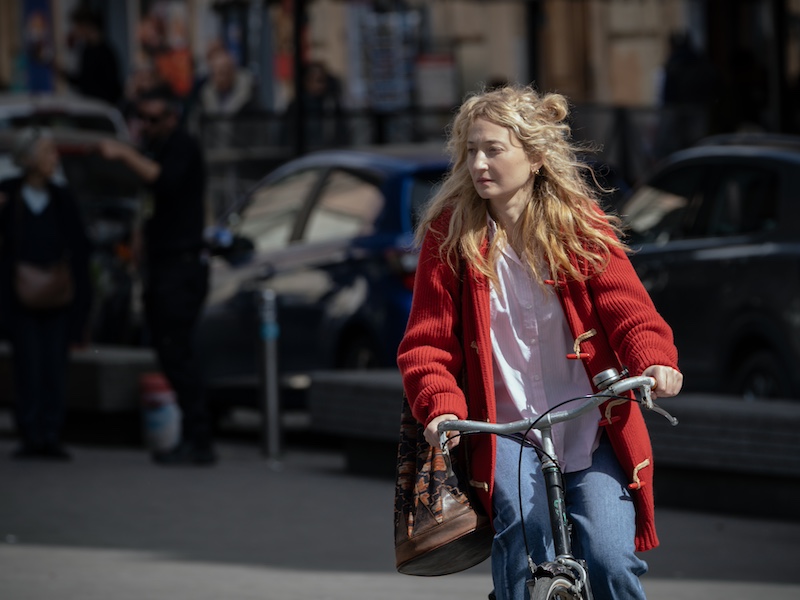
Based on the acclaimed book by the late writer and activist Michela Murgia, the film follows the story of Marta and Antonio, a young couple living in Rome. She works as a high school gym teacher while he is a talented chef emerging in the demanding culinary scene of the Italian capital. Their shared life in the Trastevere district is shaken, ruptured, and permanently dismantled following what appears to be an innocuous argument. Antonio decides to leave Marta; he moves out, moves on, and dedicates his energy to work, which thrives according to the excellent online reviews he receives. Marta, extraordinarily played by Alba Rohrwacher, experiences unbearable loss and falls into deep grief, isolating herself from loved ones. Soon, she notices her health is affected; she can barely eat and feels weaker every day. A routine examination reveals that rather than the effects of heartbreak, she is experiencing the symptoms of a terminal illness with only a few months left to live. Shocked and angry at first, she decides not to stay passive, but to fight for her life while keeping her condition a secret. When it becomes clear that nothing can be done, she makes a conscious decision to live the life she has in full. She starts learning Korean and experiences different foods, tastes, textures, and people. Antonio, wonderfully played by Elio Germano, soon comes to the painful realisation that he made a mistake he might not be able to correct as he wanders around Rome, unable to stop thinking of Marta. In a bittersweet and tender but wholly dignified manner, Marta decides to depart in her own way, saying goodbye to her loved ones through the joy and lust for life that marked her last days.
I had the honour and pleasure of meeting Isabel Coixet at the BFI, just before the premiere of Three Goodbyes (2025) at Cinema Made in Italy. We began by discussing her deeply personal motivations for adapting Murgia’s work at this specific moment—not only as a tribute to the late author's legacy but as a vital reminder of life’s fragility in an increasingly digitised world. We spoke about the film’s tactile aesthetics and the unnerving commercialisation of our everyday lives that serves as its backdrop.
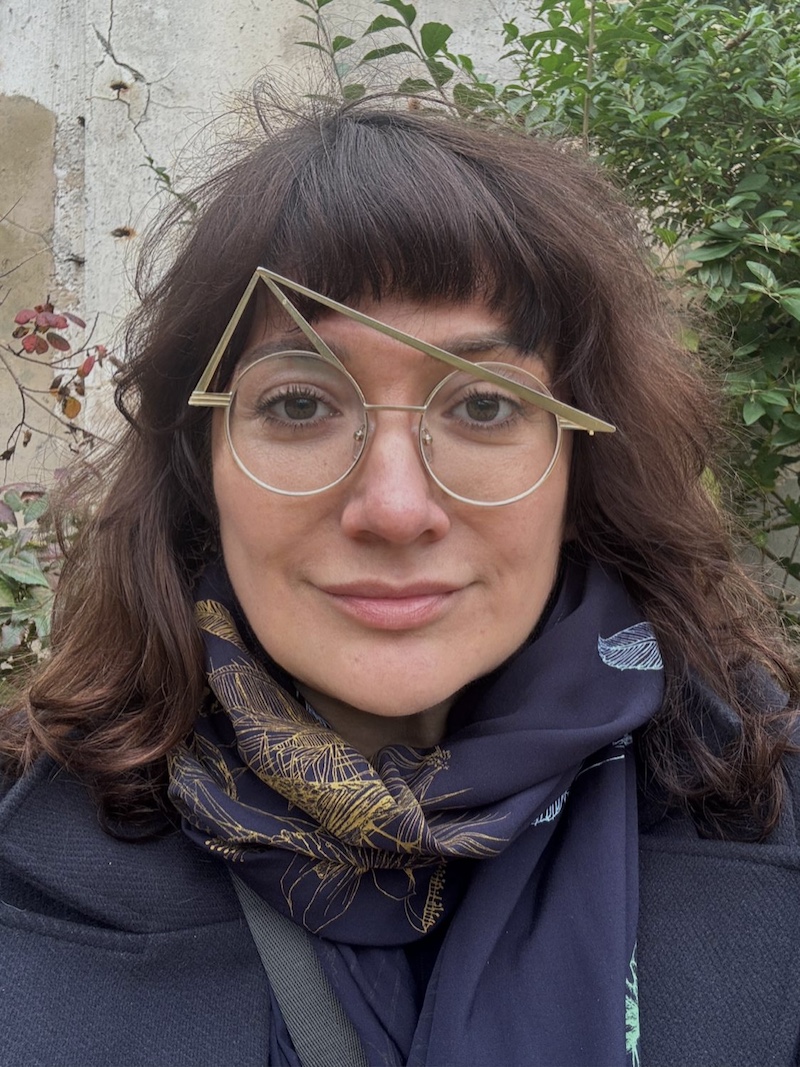
F.I. The film is an adaptation of Michela Murgia’s award-winning book Tre Ciotole (2025) whose stories are thematically connected to your film My Life Without Me (2003). What drew you to the book and what was the decisive factor in bringing this world to cinema, almost 23 years after your My Life Without Me?
I.C. I have to say that since I made that film many years ago, one of the reasons why I didn’t want to read Michela’s book was exactly that. Because I thought “Ok, I am going to do another film about someone dying? A woman dying?” (laughs). And I said to the producer: “Thanks for the offer. I admire Michela so much, but I can’t do this”. It was her last book, and it wasn’t finished. But he insisted and then I ended up reading the book and I really loved two stories. The story of Marta, and the story of Antonio. The book has 14 short stories. But most of them are set in during the Covid pandemic and that was something I didn’t want to explore. I have zero interest in exploring the topic and making a Covid movie. But it is true that My Life Without Me (2003) my life without me was 20 years ago, and I changed my mind because I really liked Marta’s character and the fact that she is a single woman, with no kids and I thought that it would make it more pure in her motivation to find this lust for life, when she knows she is going to die. And I said “Yes”. And I am very happy I did it. I have to say that I never met Michela Murgia, and the beauty of making a film in another country with another culture, with another universe, is how you immerse yourself in something that you don’t have a natural connection to. I loved going cycling in the Trastevere, in places such as restaurants and bars, meeting people she knew, her last partner, her kid, her adopted kids and it was very very rewarding. It was a very rewarding and beautiful experience.
F.I. That personal experience of the city comes through the film beautifully. The city of Rome is an unseen character t. We have the historical element, the monumental element of Rome that everybody knows, but then there is a contemporary expression which seems more like a battle. The battle between the Rome of the locals, and the Rome that is almost post-digital now; an aspect of the city that is close to a touristy re-invention through digital companies impacting quotidian life. Airbnb, which is mentioned in the film, is a prime example.
I.C. I have been coming to London for many many years. I have worked here; I even had a London boyfriend many years ago. This morning I was walking and I was, you know: “Why are all these people in Zara? What is this franchise we are all part of? What’s the point of doing the same things you do in Spain, or in France? What’s the point of being a tourist these days?”. And I don’t have an answer. And that happens in Rome. What is the point of going to the Vatican with 800 people and the audio-guide? I am really against audio-guides. And still in Rome you can go to the Trastevere — Ok, in Trastevere there is a part that is really touristic. But there is another part where you can find normal places where normal people go where they serve pasta for 12 euros, and not 25 for something that is not even a real dish. It is like when you see all these Americans who go to MacDonald’s in Paris. I never understood that. What is it about going abroad, but experiencing the same thing? I think there is definitely something worth studying, researching here! And of course, I understand people who use their apartments as Airbnb. But what that does to a city is that rents are getting higher, you are kicking out old people which I think is really unfair. And this is something happening in my hometown, Barcelona. But it also stems from education, you know. For example, La Fontana Di Trevi. What is the sex appeal of La Fontana Di Trevi when you have to elbow people to get near it? So, I have to say that the Rome I am showing in the film is a Rome that I like. Little corners, little walls, little Madonnas who are not grandiose. And you can still go to these places. You can still go to the statue. It was a very normal neighbourhood, and you could see and experience people like the Romans do. And of course we show the Vigneto, the neighbourhood where Pasolini made two films. And those are the neighbourhoods I like. The centro storico (the historical centre) doesn’t make any sense to me.
F.I. I think this contributes to the authenticity of the film in a way of highlighting both its tenderness and a sense of introspection. Obviously, there are many elements coming together to achieve this, but undoubtedly Alba Rohrwacher’s performance is extraordinary, because she approaches this character with so much depth and fragility that carries the film essentially. She expresses a goodbye that is a love letter serving a testament to her dignity and self-respect. Then she finds, as you said, the joy of life. So, I was wondering how you went about working with Alba to bring this character to life.
I.C. I always thought of Alba, even when I was reading Marta’s book. And I have to say before writing the script I had a coffee with her and I told her: “You know, I am thinking of making this movie. Would you be interested?”. And she said: “Yes”. And for me that was very helpful, because there are things in the movie that are very simple, like when she is having the ice cream. I always thought this is as a turning point. Because the film uses very simple things. There is nothing external to the life of these people. And I always had this image in my head when she has the ice cream; this is the first ice cream she had in her life and also she is aware that it may be the last one. But the mix of these two things had to be in her face. And when you have an actress like Alba who is able to portray this simple but complex paradox, everything is easy and she is able to do that. She is able to transform very very basic things, such cutting rucola, or cutting a kiwi or talking to the K-pop cardboard character. You need an extraordinary actress, otherwise this will not work. I knew for me she was the only one for this character. And Elio is the same, Elio is one of those actors who changes from film to film. It’s incredible how it becomes difficult to recognise him sometimes. And I was very lucky to have them because they are both extraordinary.
F.I. I think that what was also striking was how everything came together; the subtlety came together, the intensity came together in a very balanced way as you were navigating complex issues. But it never came across as something didactic or overwhelming, and I think that is also a testament to your vision and talent, which is expressed mainly through your decision to shoot on 35mm film. It seems to be very important for the aesthetic signature of the film.
I.C. I always thought of the 4:3 format and also about the Super 8 because we don’t have them a lot together in cinema. It is at the beginning, and we have very few scenes of them. And I know that Super 8 is not something that is popular now as it was in the ‘80s or ‘70s. But I think in a way they remember their past, it’s like a movie. But I also think that, if I remember my past as a movie, we all make these constructions in our heads about the past. And the 4:3 format is to also avoid films we have seen in the past, of the likes of Fellini and Monicelli, Ettore Scola and Comencini and Sorrentino where you have this epic Rome. I wanted to avoid that. And I think that this format gives you an intimacy, and it is also a humbler format. You don’t try to impress. Also 50% of the film is Alba alone. And I think that this format helps you to be with her in her home while talking to the K-pop character (laughs).
F.I. (laughs) That was interesting to watch!
I.C. That was Michela. I have to say I am not a fan of K-pop at all! For me they all sound the same. But she really was into these K-Pop singers and bands. And, when she knew she was going to die she started learning Korean. I don’t know how far she went, but she did it.
F.I. So that is another goodbye maybe to the old self. We have of course three goodbyes as is the title of the film, but there are many more. As you were talking just now, I was thinking that there is a goodbye to the Rome we’ve seen in cinema.
I.C. There is a bunch of goodbyes! (laughs). Yes! Technically we have three, but it could be like six.
F.I. Six or more. And potentially the element that links everything together is how we depart from intimate places, situations and dynamics. For example, the reviews that Marta leaves online about Antonio’s restaurant is an impressive element, because it is only at this day and age we would be able to do that. We have this digital mediation of things that need to be expressed potentially in person, where you would have had a completely different language.
I.C. For me it is always a mystery why all these reviews? There is a moment I love in the film when one of the characters, Antonio’s assistant who is played by Galatèa Bellugi —an amazing young French-Danish-Italian actress—says: “Reviews are kind of sweet, No?”. In a way I feel pity for people who write reviews like: “No! (Don’t go!). Because we’ve had a horrible experience at that restaurant”. And how easy also it is to write about that. And how easily people believe in those reviews. And why are you wasting your time? What are you trying to prove? This is very strange.
F.I. I think that today this digital mediation is almost used as a proof that we exist and our experiences are meaningful. It is strange how it has permeated all facets of our lives ranging from restaurant reviews, to cinema and the use of Letterboxed for example where films and filmmakers who are not mentioned there remain unknown by younger audiences. I think you approached this very elegantly and poignantly.
I.C. It’s exactly what you said. I was teaching at New York University (NYU) last year and it is exactly that. I was telling students about Letterboxd, that I don’t really care anymore. But for them it was a main thing. It is all about the stars, the little stars and the little hands and all the little things they can press.
F.I. In a manner of saying goodbye, I would like to close with Antonio’s final words that are heard as the credits roll. This was a very good joke! And quite fitting!
I.C. (laughs) My father was a guy who was always telling jokes, and this is one of the few that I remember. It is a joke that I also heard in Cuba, in Italy, in Brazil. This is a joke that has been there forever, and I always wanted to put it in a film! And I found the perfect spot! (laughs).
F.I. It was the perfect spot indeed to end the film on a light note! Thank you so much!
I.C. Thank you!
Info:
Three Goodbyes (Tre Ciotole) (2025)
Written by Isabel Coixet and Enrico Audenino, based on the novel by Michela Murgia. Directed by Isabel Coixet. Cast: Alba Rohrwacher, Elio Germano, Francesco Carril, Silvial D’ Amico, Galatèa Bellugi, Sarita Choudhury. Cinematography: Guido Micchelotti. Editor: Jordi Azategui. Produced by: Cattleya Ruvido Produzioni Bartleby Film and Vision Distribution. Buena Pinta Media Bteam Prods Perdición Films Apaches Entertainment Tres Cuencos Aie.